
Two gaps between a swarm and its audience
Swarm robotics faces a demanding reality gap: discrepancies in sensing, timing, communication, and actuation propagate through local interactions and reshape collective dynamics. Deploying robot swarms in front of live audiences revealed a second challenge - a perceptual gap between the collective organization a swarm physically realizes and the one an observer reads from its motion.
We examine these stages using tabletop, aerial, and human-scale mobile-manipulator swarms executing the same behavioural code in public performances. Cross-platform measurements show that broad behavioural identity survived deployment, while observer-accessible properties such as tempo and directional sharpness varied substantially across embodiments. Audience responses show that meaning attribution and affect depend on the robotic system and need not vary together.
The central argument is not that either gap has been closed, but that human-facing swarm robotics must make both observable and actionable.
From specified organization to human interpretation
A designer specifies a collective organization; a particular set of bodies realizes it under their own dynamics, sensing, and update rates; an observer then reads an organization from what those bodies do. The two gaps do not add - they compose: the realization step fixes the stimulus that the reading step operates on.
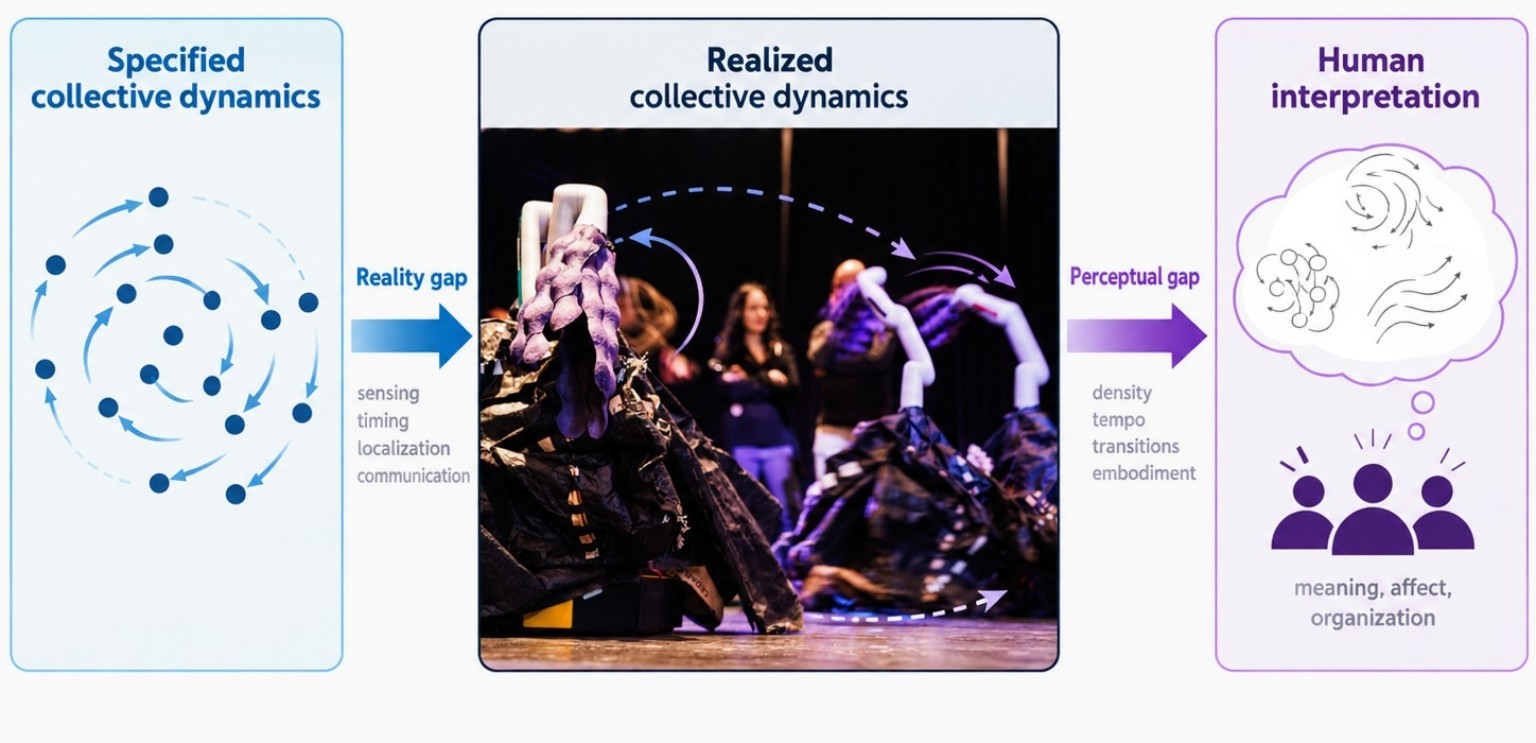
Reality gap
From the specified collective organization to the collective physically realized on hardware. Discrepancies in sensing, localization, communication timing, or update frequency can propagate through the network and alter group-level dynamics - even when the same decentralized program runs correctly on every agent.
Perceptual gap
From the realized collective to the organization an observer infers. In a decentralized swarm, the organization of interest often lives in the relations among agents - density, alignment, synchrony, and transitions between behavioural regimes - shaped further by scale, morphology, sound, and spatial framing.
Three embodiments, one behavioural code
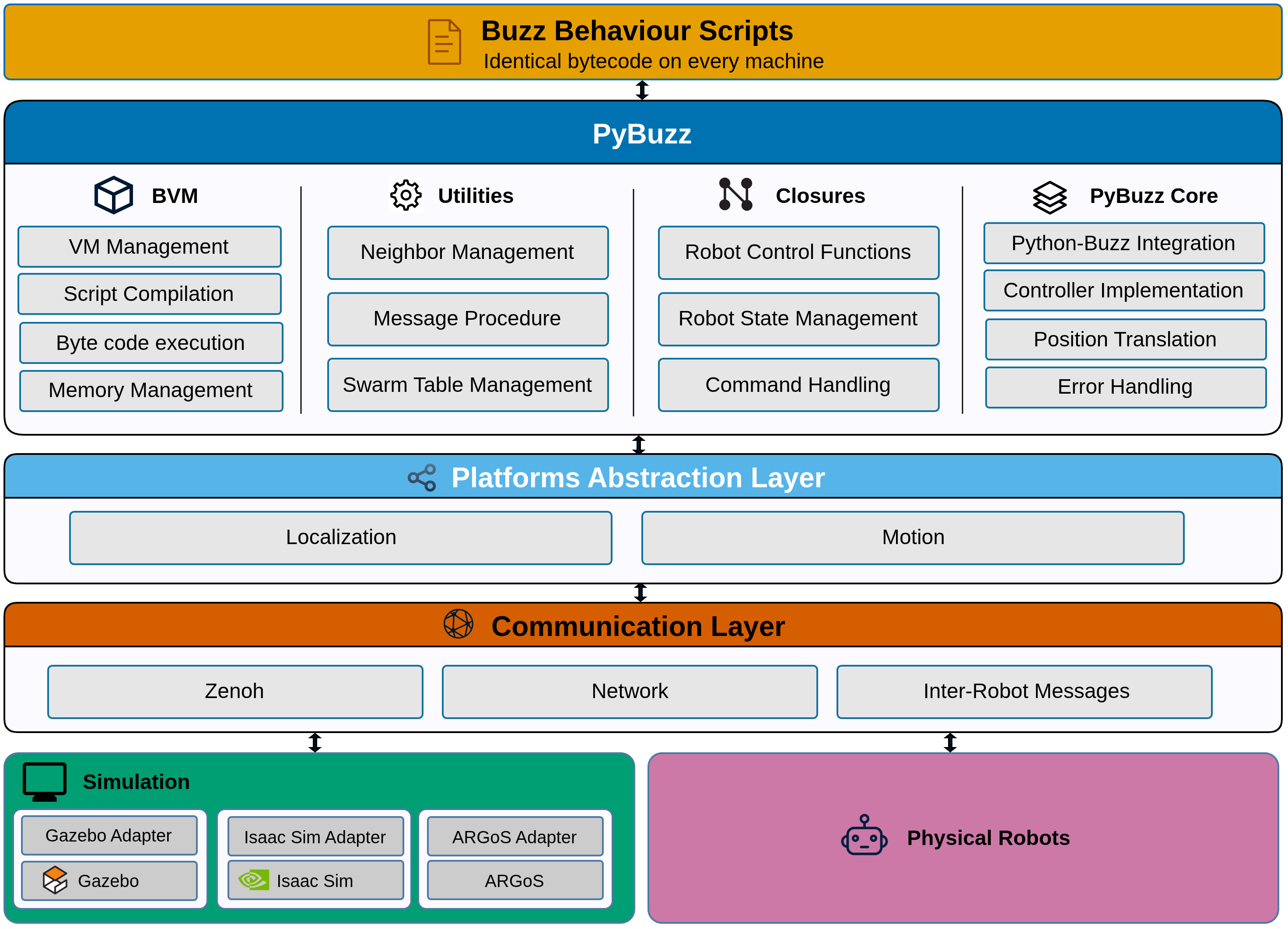
DESSAIM brought together three swarms spanning almost two orders of magnitude in physical scale. Across all of them, the same Buzz behavioural code was deployed through PyBuzz, a software stack that confines platform-specific sensing and actuation to adapter layers - making genuine cross-platform comparison possible.
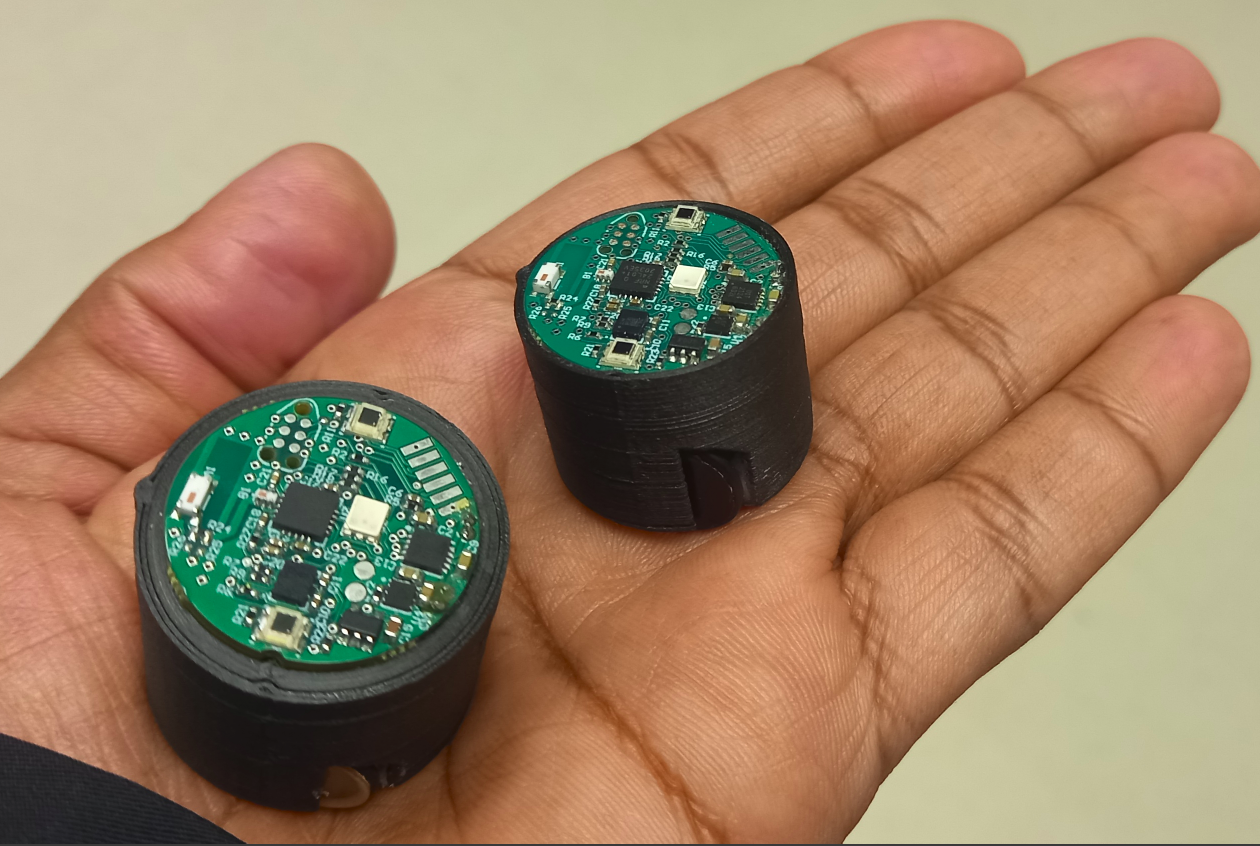
Sushis
TabletopPalm-sized differential-drive robots for dense, fast-iteration collective behaviours on a table.
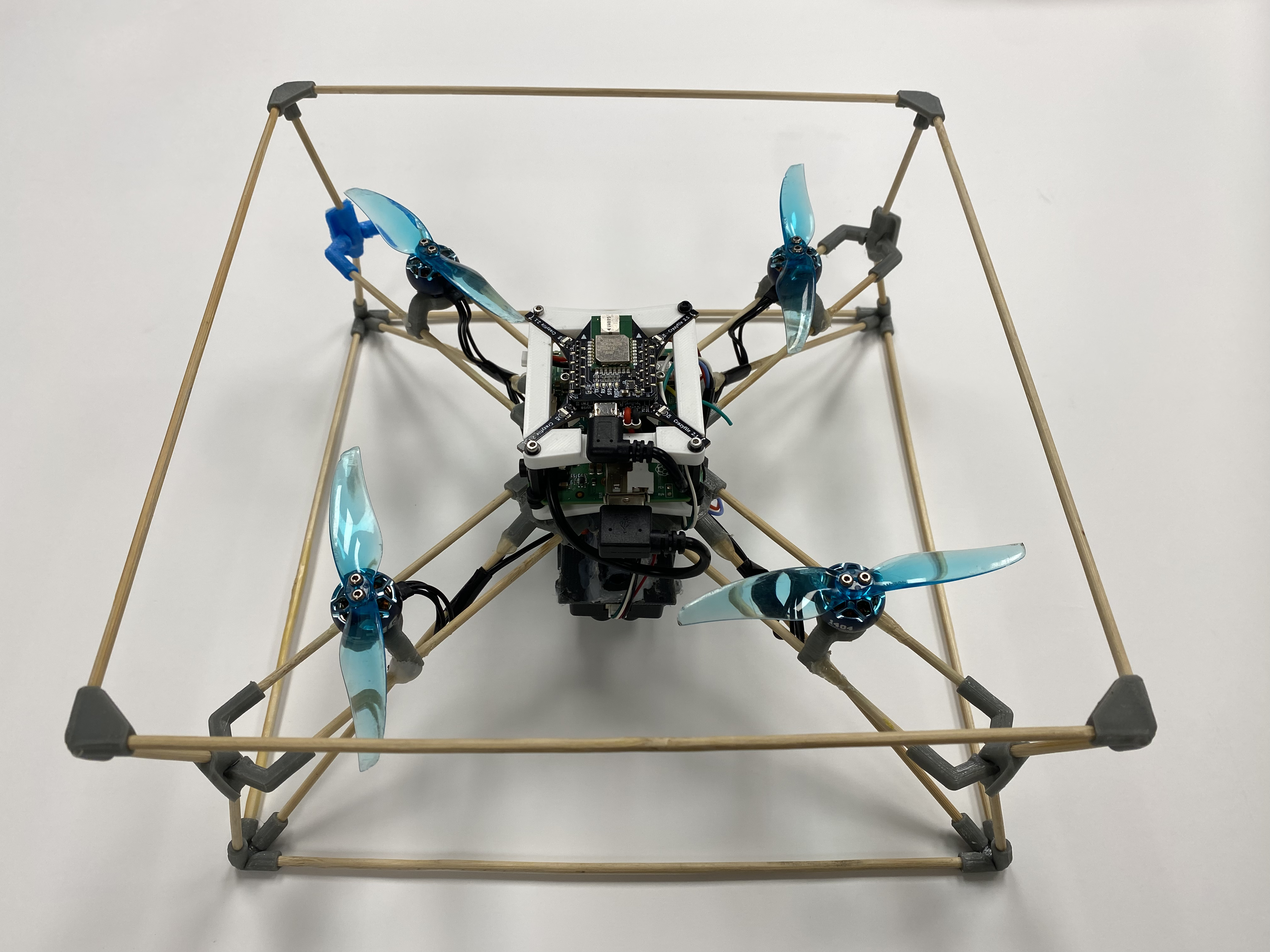
CrazyCognies
AerialA drone swarm bringing collective behaviours into the air.
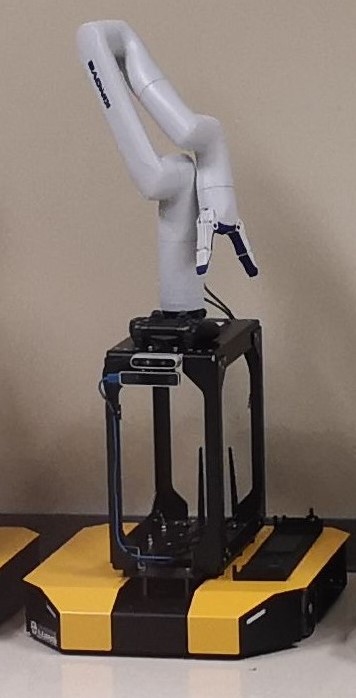
Doodies
Human-scaleHuman-scale mobile manipulators that share physical space directly with the audience.
Performances & residences
Over two years, our heterogeneous swarms performed in public across changing venues, different lighting and acoustics, and audiences in close proximity - an ecological testbed no laboratory replicates easily. Below are video clips from the shows and residences that cannot be included in the paper.
Key takeaways
Organization transfers, expression does not. Behaviours kept their defining collective form on all three bodies, yet their realized timing and directional sharpness differed substantially.
Abstraction has limits. Buzz/PyBuzz standardize sensing and motion, but not the physical timescale: the same control-step parameter meant real durations differing by roughly 3.5× across platforms.
The collective is the perceptual object. Meaning was read from relations among agents - density, alignment, synchrony, and transitions - rather than from any single robot's trajectory.
Embodiment shapes the reading. Sushis evoked collective and biological metaphors; Doodies supported both individual and group-level readings, from graceful to confrontational.
Meaning ≠ affect. Greater meaning attribution did not imply more positive affect; legibility, comfort, and acceptance stay distinct dimensions.
Performance is an ecological stress test. Public shows couple both gaps at once - technical realization and human interpretation must hold together in the same uncontrolled setting.
Team
The DESSAIM collective brings together engineers in robotics, computer science, and biomechanics; artists from dance, movement, puppetry, and object theatre; and experts in functional and expressive movement analysis.
Authors
 Ali Imran
 Abdalwhab Bakheet Mohamed Abdalwhab
 Rafael Gomes Braga
 Hélène Duval
 Audrey Rochette
 Vivek Shankar Varadharajan
 Yann Bouteiller
 Jean Mazerolle
 Giovanni Beltrame
 David St-Onge
Collaborators
Citation
If you find this work useful, please cite it.